AIChE is expanding and fostering collaboration around the globe. With the establishment of the International Committee in 2007, AIChE has cultivated international relations with other chemical engineering organizations, such as the UK's Institution of Chemical Engineers (IChemE), the Korean Institute of Chemical Enigneers (KIChE), and the Indian Institute of Chemical Engineers (IIChE). At the 2012 Annual Meeting in Pittsburgh, PA, the U.S.-India Symposium on Energy, Environment, and Sustainability featured speakers from both AIChE and the Indian chemical engineering world.
Emily Fragenberg
Emily is an assistant editor of Chemical Engineering Progress (CEP), where she is responsible for the Back to Basics section. Her articles are targeted toward young professionals and recent graduates, and cover a range of topics that include pump selection guidance to flammable materials risk-reduction strategies to intellectual property standards.
Emily has a BS in chemical engineering from Villanova University. She enjoys watching live theater and old movies in her spare time.
Engineering in India: challenges and opportunities
Chemical engineering in India originated at Calcutta University in 1921. Since its birth, chemical engineering has been applied to many of India's basic issues to improve the quality of life of its people. For example, in 1947, the average lifespan of an Indian male was 38 and an Indian female was 43. Today, these numbers are much higher thanks to advances in food production and medicine -- many of which were created and developed by chemical engineers. In a country of 1.24 billion people, the majority of the resources are committed to providing energy and food for its population and alleviating poverty. Until very recently, sustainability has been an afterthought due to these more pressing challenges. However, resource depletion and the exponentially growing population have pushed sustainability to the forefront of India's challenges. Global collaboration and a new generation of chemical engineers equipped with a wide breadth of knowledge will be required to solve India's sustainability problems.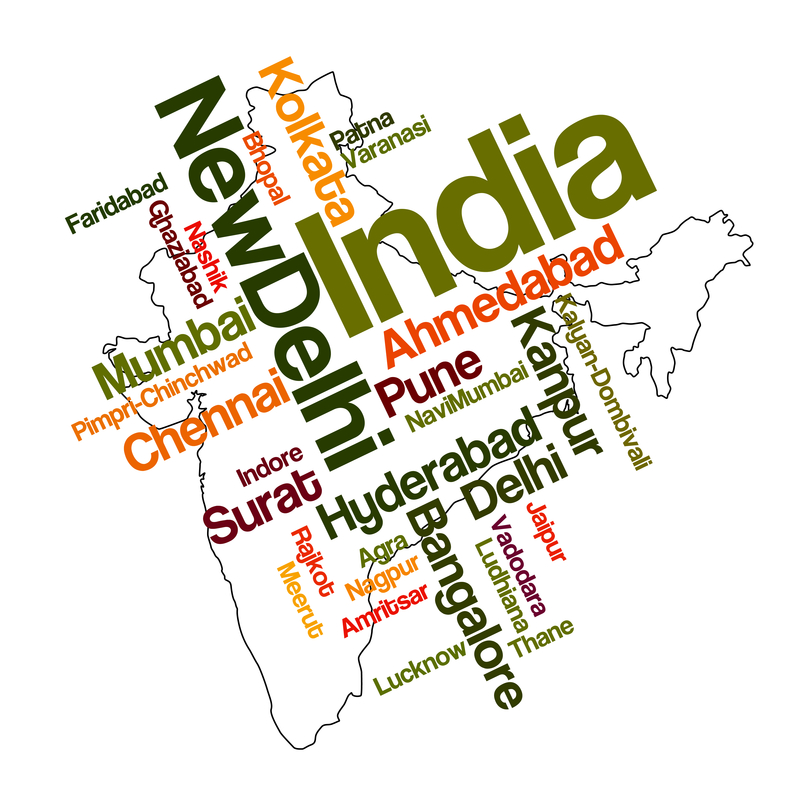
Comments
From my limited experience traveling through these countries is that China is in a better position to lead in the sustainability arena. While both countries have a large population of poor people, I think there is a higher level of services provided to the average Chinese person. They are also structured differently - in China the charge can be driven by a few from the top where in India the change has to be driven from grassroots up. Both are large ships that are difficult to turn quickly, but China has a more centralized control system that would provide for more efficient steering. If it is a value that the leadership latches onto, change will come quickly.
The US is more similar to India, and I think we have seen how difficult producing lasting change can be. The average American is making those decisions from a vastly difference reference point, but even an economically challenging period has made the change more difficult.
- Log in to post comments